
2025’s Crypto and Travel Rule Predictions: What 21 Got Right
Throughout 2024, we continued to see the global crypto landscape evolve rapidly, with regulators refining frameworks, jurisdictions strengthening cybersecurity expectations, and user behaviour shifting in response to market dynamics and new rules. Building on these developments, we outlined our key predictions for 2025.
Below, we recap those predictions and highlight what we got right.
Read 2025's Top 5 Crypto and Travel Rule Predictions
21’s Prediction: Increased Regulatory Overview of Cybersecurity
As regulatory expectations increased globally, we predicted that cybersecurity would become an even stronger focal point for legislators, as seen in the EU and the US, particularly as digital platforms continue to grow and cyberattacks become increasingly sophisticated.
What 21 Got Right
In 2025, this trend continued. Global policy reviews show jurisdictions are prioritising risk-based cybersecurity standards and data reporting obligations for digital asset entities.
In 2025, the UK introduced its Cyber Security and Resilience Bill, similar to the EU’s DORA. This bill aims to expand cybersecurity duties across all sectors, including the requirement for mandated incident reports and the broadening of risk assessment obligations. Hong Kong has also introduced its Cybersecurity Law, which is set to take effect in 2026. The new law requires entities to enhance their computer systems and report cybersecurity incidents promptly.
21’s Prediction: Forced Travel Rule Implementation
We predicted that the EU’s Transfer of Funds Regulation (TFR) would create a ripple effect, prompting many jurisdictions to adopt the FATF Travel Rule to remain connected to the EEA and avoid reputational risks, such as being added to the FATF’s Grey List.
With major markets such as Switzerland, the UK, and the US implementing their own frameworks, aligning with FATF guidance was expected to become a necessity for global financial participation.
What 21 Got Right
Whether a ripple effect or not, 2025 saw the Travel Rule go live in Türkiye in February and South Africa in April. South Africa’s implementation also resulted in its removal from the FATF’s Grey List.
Australia finalised its Travel Rule framework, with its enforcement scheduled for 31 March 2026. Brazil also followed suit, finalising its Travel Rule and noting that the EU’s MiCA framework served as a baseline. Brazil’s Travel Rule is set to go live in February 2026.
21’s Prediction: Increased Self-hosted Wallet Usage Due to the TFR
We anticipated a continued shift from centralised exchanges to self-hosted wallets. Factors supporting this included rising cyberattacks, declining trust in exchanges, and the growing impact of the Travel Rule, particularly as users seek greater privacy and fewer data-sharing obligations. Due to the TFR taking effect on 30 December 2024, we expected this migration trend to accelerate.
What 21 Got Right
As of late 2025, Bitcoin exchange reserves are at historically low levels. This trend suggests that an increasing amount of BTC is being held in off-exchange wallets, reflecting users’ desire for greater control, enhanced privacy, and reduced exposure to exchange-related risks.
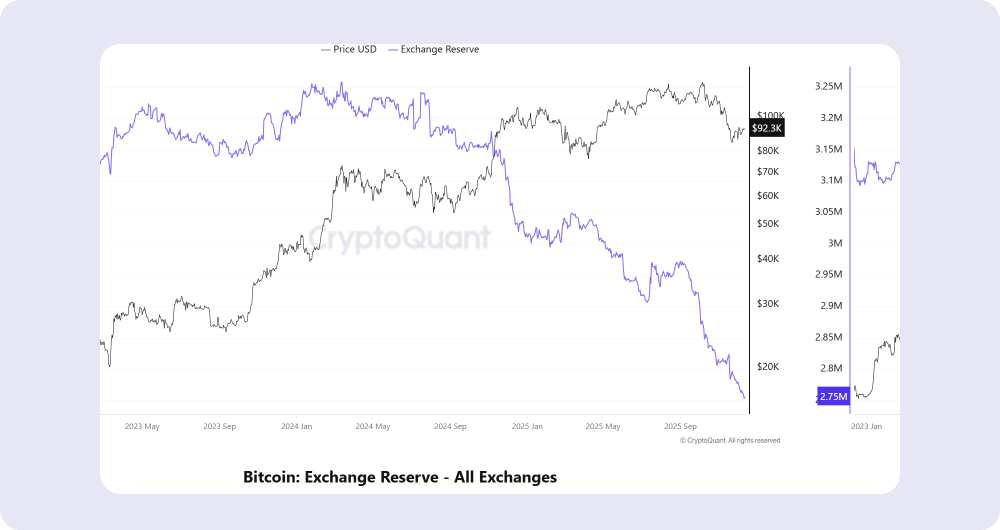
Additionally, the graphic below depicts a dip in BTC being held in exchanges mid-year, coinciding with some of 2025’s major exchange hacks: UPCX in April, Cetus in May, Norbitex in June, CoinDCX and BigONE in July, and the significant Solana-based breach in South Korea in November, with further withdrawals throughout the year. It can be assumed that these withdrawals were pushed by the lack of trust in exchanges.
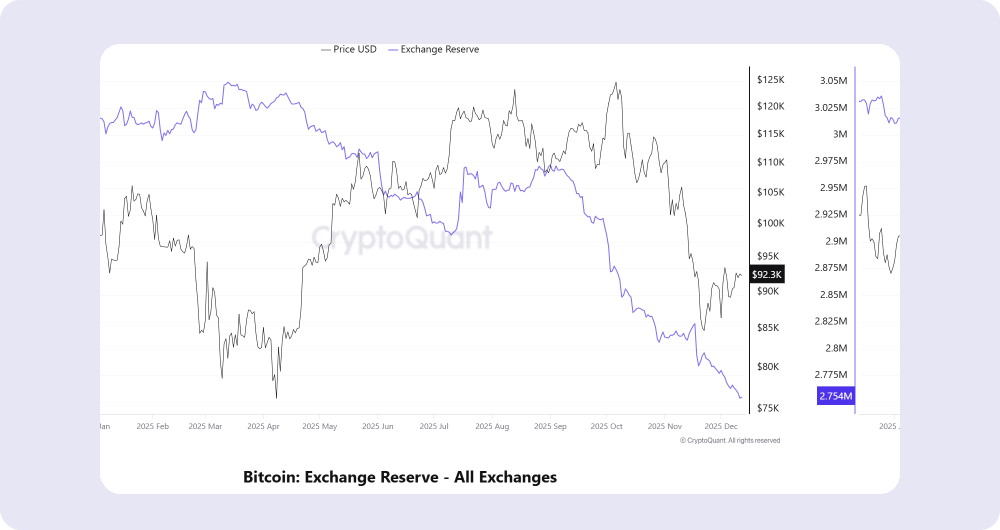
Image sources: CryptoQuant Bitcoin: Exchange Reserve - All Exchanges
21’s Prediction: Increased HODLing
Given bitcoin’s bullish trajectory, increasing adoption, and strengthened institutional involvement, we predicted a rise in long-term holding behaviour. Declining exchange balances and rising use of self-hosted wallets also suggested renewed confidence in BTC as a store of value.
What 21 Got Right
While we have noted an increase in self-hosted wallet usage, the underlying dynamics are somewhat more nuanced.
Glassnode noted a decrease in long-term holders, with a reduction of 452,532 BTC. The number of BTC decreased from 14,755,530 in July to 14,302,998 as of 16 November. However, there has been an increase in short-term holders, those holding assets for less than 155 days.
Interestingly, the sales by long-term holders were most likely due to lifestyle changes, rather than negative views on the asset, Nicholas Gregory, Bitcoin OG and Fragrant Board Director, stated.
Source: Short-Term Holder Bitcoin Supply in Loss Climbs to Highest Level Since FTX Collapse
21’s Prediction: USDT Stablecoin Dominance
We predicted that USDT would continue to cement its position as the leading stablecoin due to its long track record, deep liquidity, and peg to a strengthening US dollar. Increased transaction volume, global usage, and broader trust in USD-pegged stablecoins were expected to reinforce USDT’s dominance.
What 21 Got Right
USDT continues to represent a significant portion of the stablecoin market, with its circulating supply exceeding $170 billion as of late 2025, making it one of the largest stablecoins in circulation and a central liquidity anchor for crypto markets. This dominance supports transactional demand and maintains its key role in crypto trading and finance.
Stay up to date with crypto trends and news like this - sign up for our monthly newsletter.